The Field Book Proper Pigging  ·  HydroTech Testing Services
Proper Pigging: A Beginner’s Guide to Hydro Testing and Field Ops. The field-proven foundation for safer, smarter pipeline operations.

Henry Froats Jr.  ·  Gary Zunkel  ·  Michael Schricker HydroTech Testing Services, 2026  ·  172 pages  ·  $89 and shipping

FrontispieceChapter 4

Frontispiece
overall length sealing cup hub tail eye
Frontispiece. A four-cup mandrel pig in elevation. Fluid pumped behind the pig cannot pass it, so the pig advances at roughly the velocity of the driving fluid, pushing what lies ahead and separating it from what lies behind. Every phase of a pressure test, from the cleaning run through the drying train, rests on that one fact.

The book172 pp. · $89

A working reference for hydrostatic and nitrogen pressure testing

Most of what goes wrong on a pressure test goes wrong before the first gallon of water enters the pipe.

The test itself, the eight hours a crew spends watching a deadweight and a chart recorder, is the visible tip of a project that started months earlier with elevation profiles, water permits, pig selection, and a hundred questions that someone either asked in time or did not.

This book exists because the industry has plenty of regulation text and plenty of tribal knowledge, and very little in between: a single reference that explains both why the physics and the regulations work the way they do, and what to actually do at six months out, one month out, one week out, and on test day.

The material grew out of a professional certification course on hydrostatic and nitrogen pressure testing developed and taught by HydroTech field personnel, refined by real projects: tests that passed, tests that failed, water sources that fell through, recorders whose batteries died at 2 a.m., and the paperwork that either saved the test or sank it.

It stands deliberately on the shoulders of the pigging and testing literature that came before, above all Cordell and Vanzant’s The Pipeline Pigging Handbook.13 Where that tradition covers pigging in all its breadth, this book drives one discipline to depth: the pressure test, with the pig as the essential tool it has always been.

Read Chapter 1 Order a copy Examination copies Take the course

Hydro TestingCh. 1, 2, 6

Two jobs, two phases, one pressure ladder

A pressure test does two distinct things: it proves the pipe can carry the pressure, and it proves the pipe does not leak. The regulations treat them as separate phases because they answer separate questions.

  • Why we test, and what a test cannot proveCh. 1
  • The strength, leak, and spike phasesCh. 1, 11
  • Barlow’s formula and percent SMYSCh. 2
  • The hydrostatic gradient and the elevation windowCh. 2, 6
  • Developing the pressure ladder for a real segmentCh. 6
  • Class locations and permissible test mediaCh. 6, 9
Pigging OperationsChapter 4

The tool every phase of the test depends on

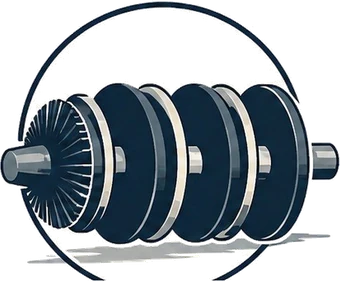
Fluid pumped behind a pig cannot pass it, so the pig advances at roughly the velocity of the driving fluid, pushing what lies ahead and separating it from what lies behind. Cleaning, filling, dewatering, and drying all rest on that single fact.

  • The pig family, and the job each one is built forCh. 4.2
  • Gauge pigs, and reading the plate on receiptCh. 4.2
  • Launchers, receivers, and temporary test headersCh. 4.3
  • Trains, tracking, and speed controlCh. 4.4
  • Valve coordination during fill and dewateringCh. 4.6
  • What goes wrong, and the fundamental each failure violatedCh. 4.8

Plate II
a foam swab b mandrel cup pig c wire brush pig gauge plate d gauge pig e sphere
aproving runs, free water, drying trains bdisplacement, line fill, dewatering ccutting rust, millscale, wax, debris dbore verification before the test ebatching and meter-prover service
Plate II. Five specimens of the pig family. One important exclusion: because open-cell foam lets fluid permeate through the body, foam pigs are not normally suitable for the line fill ahead of a hydrostatic test, where positive liquid-gas separation is the whole point. Use a sealing mandrel pig, sphere, or batching pig for fill duty.

Safety & PlanningCh. 3, 5, App. A

Most of what goes wrong goes wrong months early

The eight hours a crew spends watching a deadweight is the visible tip of a project that started months earlier. The master checklist is organised by countdown: six months, one month, one week, one day, and test day.

  • Acceptance criteria settled in writing at six monthsCh. 5
  • Operator qualification for every covered taskCh. 5, 14
  • Exclusion zones once hoop stress exceeds 50 percent SMYSCh. 11, App. A
  • The safety and control gate before any pressurisationApp. A
  • Nitrogen asphyxiation, the hazard that gives no warningCh. 3.3
  • Failure contingency staged before, not improvised afterCh. 16

Plate I
frac tanks test trailer pressurisation pump
astaged water, frac tanks bpressurisation pump and manifold cwelded string in open ditch dtest trailer, charts and deadweight
Plate I. A pressure test on the right-of-way. The eight hours a crew spends watching a deadweight is the visible tip of a project that began months earlier with elevation profiles, water permits, and pig selection.

Inspection & AnalysisCh. 10–14

The pressure trace never speaks for itself

Pressure in a sealed, water-filled pipeline moves with temperature, air content, and elastic effects whether or not a single drop leaks. The analyst’s job is to predict those movements quantitatively so that what remains, the unexplained residual, can be judged.

  • Instrument selection, resolution, and probe placementCh. 10
  • The pressure-volume plot, compiled live during the climbCh. 11.3
  • Pressure-temperature analysis and the ΔP/ΔT sensitivityCh. 12
  • Estimating trapped air from the plot’s early deviationCh. 12.6
  • Leak location: bisect, amplify, walkCh. 13
  • The balance statement and formal acceptanceCh. 12, 14
Figure 1
Figure 1. The complete record of an eight-hour hydrostatic test on a new 22-inch crude oil pipeline: 20,862 feet of 0.500-inch wall X-60 pipe below grade in the south Louisiana marsh, including 4,150 feet of horizontal directional drilling. Staged pressurisation with logged holds, an eight-hour window opening at 12:15 p.m., and a controlled bleed-down begun at 8:36 p.m. The shaded band is the specified acceptance window, 2,325 to 2,365 psi. Data: the test log reproduced in Appendix C.

Equipment & ToolsCh. 7, 8, 10, 15

What arrives on the jobsite, and what it must be able to prove

Every component that sees test pressure needs a documented rating above the maximum local test pressure, and every instrument needs a calibration certificate whose serial number matches the one on the equipment.

  • Test headers and temporary piping, proved before useCh. 8.1
  • Deadweight testers as the site pressure standardCh. 10.1
  • Chart recorders, loggers, and redundant instrumentationCh. 10
  • Fill and pressurisation pumps, screened and sizedCh. 7
  • Frac tanks and water stagingCh. 7
  • Nitrogen supply: liquid, membrane, and trailer systemsCh. 3.3
  • Dewatering trains and drying plantCh. 15

Training & ResourcesApp. A–H

The book as a working kit, and as a course

The appendices are the part crews actually carry: a checklist organised by countdown, the formulas and constants, a complete worked evaluation with real field data, and a question set built for classroom and continuing-education use.

  • The Master Hydrotest ChecklistApp. A
  • Formulas, constants, and conversionsApp. B
  • A complete test evaluation, with field dataApp. C
  • Glossary of thirty-five termsApp. D
  • Eighty study and review questionsApp. E
  • Continuing education, in three formatsApp. F
  • Model contract language for pressure testingApp. G
  • What to expect from a professional testing contractorApp. H

The continuing-education programme Request the syllabus

A contractor willing to publish its standard is a contractor prepared to be held to it.
Appendix H · What to Expect from a Professional Testing Contractor

Contents

Part I  ·  Foundations

  • 1Why We Test2
  • 2The Mechanics of Pipe Under Pressure10
  • 3How Test Media Behave21
  • 4Proper Pigging Fundamentals28

Part II  ·  Planning the Test

  • 5The Planning Framework40
  • 6Engineering the Test47
  • 7Water Acquisition, Permitting, and Logistics54
  • 8Isolation, Product Movement, and Line Fill62
  • 9Testing with Gas and Other Media69

Part III  ·  Executing the Test

  • 10Test Instrumentation78
  • 11Conducting the Test84
  • 12Test Data Analysis91
  • 13Leak Detection and Location99
  • 14Documentation and Test Acceptance104

Part IV  ·  After the Test

  • 15Dewatering, Drying, and Discharge111
  • 16When the Test Fails120

Appendices

  • AThe Master Hydrotest Checklist123
  • BFormulas, Constants, and Conversions130
  • CA Complete Test Evaluation, With Field Data135
  • DGlossary140
  • EStudy and Review Questions143
  • FContinuing Education and Corporate Training150
  • GModel RFP Language for Pressure Testing153
  • HWhat to Expect from a Professional Testing Contractor155

List of Plates

  • Fr.The four-cup mandrel pig, in elevationBook
  • IA pressure test on the right-of-wayBook
  • IIThe pig family: five specimensBook
  • IIIThe launcher and its mainline connectionsEduc.
  • IVAdditive static heads at the summitsNotes
  • VThe pressure-volume plot and its three signaturesNotes
  • VIThe sliding elevation window and segment breaksRef.
  • VIIDrying: dew point against time, with soak reboundsRef.
  • 1The complete record of an eight-hour testBook

Disclaimer

This book is an educational reference. It is not a substitute for the current text of any regulation, code, or standard; for a qualified engineering analysis of a specific pipeline; or for an operator’s own written procedures. Pipeline pressure testing involves stored energy, hazardous products, oxygen-deficient atmospheres, and heavy equipment. It can injure or kill people who treat it casually. Regulations change. Always verify requirements against the current text of 49 CFR Parts 192 and 195, the applicable ASME codes, state and local requirements, and the operator’s specifications before planning or executing any test.

Continuing EducationAppendix F

Continuing education for gas and oil

Three courses on hydrostatic and nitrogen pressure testing for pipeline engineers, inspectors, and operations personnel, taught by the field crews who plan and execute the work, with this book as the text.

Operator qualification demonstrates that a person is qualified to perform a covered task. It does not demonstrate that the person understands why the pressure moved six psi at two in the morning. Qualification and competence are different things, and the distance between them is where tests get argued about instead of accepted. These courses exist to close that distance.

Request the syllabus Bring a course to your facility

Plate IIIChapter 4.3

Plate III
flow 6 7 5 1 3 4 2 8 9 10
1closure (the door) 2oversized trap barrel 3reducer 4nominal-bore section 5trap isolation valve 6mainline valve, per procedure 7kicker valve 8vent 9drain, to safe containment 10pig signaller
Plate III. A pig launcher and its mainline connections, worked with hardware in the room on the two-day course. Learn the anatomy by name, because procedures are written in it. Prove isolation, depressurisation, and drainage before opening the closure, and never from a single indication.

Courses

HT I

Executive and Project Briefing

4 contact hours

For managers, project engineers, and owner’s representatives who buy, schedule, and accept pressure tests. No calculation is required of participants. The objective is fluency: to read a pressure ladder, interpret a test window, recognise a defensible acceptance argument, and scope a contract that will not produce surprises.

  1. Why tests succeed and fail. The regulatory framework, the two distinct jobs of a test, and the planning decisions that must close at six months, one month, and one week. Ch. 1, 5
  2. Reading the numbers. Pressure ladders, test windows, and the pressure-temperature justification. Ch. 2, 6, 12
  3. Where the schedule really goes. Water, stabilisation, and drying as the true schedule drivers. Ch. 7, 8, 15
  4. The record that survives. Life-of-line record requirements and the documentation an operator should demand from any contractor. Ch. 14
HT II

Engineering Workshop

8 contact hours

For pipeline engineers and inspectors. Adds calculation practice to the briefing track. The asterisked problems of Appendix E serve as the assessment set, and a 16-inch crude oil pipeline is engineered end to end over the course of the day.

  1. Mechanics and media, with worked problems: Barlow’s formula, allowable elevation windows, system compliance, pressure-temperature response, and gas-law nitrogen inventory. Ch. 2, 3
  2. Engineering the test end to end: spike, strength, and leak pressures; segment breaks; fill and pressurisation volumes; site layout. Ch. 6
  3. Execution and analysis: instrumentation placement, the pressure-volume plot, the weighted-temperature worksheet, and the balance statement. Ch. 10–12
  4. Acceptance case study, worked as a group exercise from real field data. App. C
HT III

Field Certification

Two days

The complete programme, and the standard HydroTech’s own crews are trained against. The whole book, taught with equipment displays and field-reality sessions, with the checklists of Appendix A run as live exercises and a written assessment drawn from Appendix E.

  1. Day one, morning. Foundations: why we test and what a test cannot do; the mechanics of pipe under pressure; how water, nitrogen, and product behave.
  2. Day one, afternoon. Pigging with hardware in the room; launchers, receivers, and temporary headers; trains, tracking, and valve coordination; the planning framework and the countdown timeline.
  3. Day two, morning. Developing the pressure ladder; segment-break screening on a real profile; volumes and stroke budgets; water sourcing and permitting; isolation, purge, and line fill; conducting the test and building the plot live.
  4. Day two, afternoon. The weighted-temperature worksheet; the acceptance case study; documentation and the life-of-line record; dewatering, drying, and discharge; when the test fails. Written assessment.

Sessions

Table 1. Scheduled sessions. Further dates are arranged on request, including delivery at the client’s facility.
DatesCourseLocationEnrolment
Sep 17HT I  Executive and Project BriefingCanonsburg, Pa.Open
Oct 8–9HT III  Field CertificationCanonsburg, Pa.Four places
Nov 12HT II  Engineering WorkshopHouston, Tex.Open
By arrangementAny courseClient facilityOn request

Certification of attendance

Each participant receives a certificate of completion recording the course title, contact hours, date, course objectives, and instructor, which is the form most state boards require when an engineer submits professional development hours.

Continuing-education acceptance is determined by the participant’s individual licensing board and not by HydroTech Testing Services. Those attending for credit should confirm acceptance with their board before enrolling.

Request the syllabus Arrange instruction at your facility

Instructors

Henry Froats Jr.

Owner and Director of HydroTech Testing Services, where he leads pipeline commissioning and testing operations across the Appalachian gas fields and the tristate region. His work spans the full arc of this book in practice: hydrostatic test planning and execution, nitrogen purging, drying, and packing, pigging operations, and the client-facing engineering that turns a test plan into an accepted record. He is a frequent industry voice on pipeline integrity topics, the author of HydroTech’s published technical articles, and lead instructor of the certification course from which this book grew.

Michael Schricker

Director of AI and Marketing Technology for HydroTech Testing Services, where he builds the digital side of the company’s field practice: developer of the free HydroTech Pocket Engineer application that companions Appendix B, and architect of HydroTech’s AI-assisted field tools, client portal, and technical publishing programme. He brings an eighteen-year executive career in marketing and technology, and holds graduate credentials in analytics and corporate communications.

Field Notes

Occasional papers on pressure testing practice

Short treatments of single questions, drawn from the book and from work in progress. Written for the crew and the engineer, not for the buyer.

Plate IV
air air H₁ H₂ H₃ drive pressure ≥ H₁ + H₂ + H₃ + friction
Plate IV. Air pockets at the summits break the liquid column’s hydraulic continuity and eliminate the siphon. The separate uphill heads then add, and the drive pressure required can exceed the safe working pressure of the line.
Plate V
onset of yielding trapped air elastic line cumulative volume pumped pressure
Plate V. The three signatures a plot reader must recognise. Tracking the theoretical line means healthy elastic pipe. Shallow early and improving with pressure means trapped air compressing. Progressive flattening is the onset of yielding.

Contents

Why a Hydrotest Runs Four Hours Plus Four Hours

Where the four-plus-four liquid test and the eight-hour gas test come from in the Code of Federal Regulations, and what each phase is actually proving.

Hydrostatic testing  ·  Ch. 1, 11

Temperature, and Why a Half Degree Decides the Test

The pressure-temperature response of a sealed section is independent of segment length and large. A note on the unit mismatch that silently overstates it by a factor of 1.8.

Analysis  ·  Ch. 2, 12

What a Pressure Test Cannot Do

An honest account of the limits: a test proves a margin only at the moment of the test, a short hold can miss a slow leak, and pressure reversals are possible.

Foundations  ·  Ch. 1.5

How to Evaluate a Pipeline Pressure Testing Contractor

What an owner should expect before mobilisation, on the jobsite, and in the final report. Offered as a yardstick against which any bidder may be measured, including this one.

Practice  ·  App. H

Model Contract Language for Pressure Testing

Six clauses owners and engineers may adapt for hydrostatic testing scopes, with the reasoning behind each. A starting point, not a specification.

Practice  ·  App. G

Additive Static Heads, or Why a Line That Filled Easily Will Not Empty

Air pockets at summits break the hydraulic continuity of the liquid column. The separate uphill heads then add, and the drive pressure can exceed the capacity of the pumps on site.

Line fill  ·  Ch. 8.5, 15

Minimum Purge Velocity and the Onset of Stratification

Why a light gas rides over a heavy one at low velocity, what the published purge curves say, and the densimetric Richardson number that underlies them.

Nitrogen  ·  Ch. 9.6

Four Methods of Pipeline Drying Compared

Hot air, desiccant dry air, nitrogen, and vacuum. Mechanism, strengths, and the niche each one properly owns, with a note on the dew point criterion and its pressure basis.

After the test  ·  Ch. 15

Reference

Formulas, constants, and definitions

Appendix B and Appendix D, published openly, with calculators that carry the same arithmetic.

Plate VI
window segment 1 segment 2 segment 3 elevation
Plate VI. Segment-break screening. The allowable elevation range slides along the profile, and a new test segment begins wherever the window is exhausted. In the worked gas example the window is 203 feet.
Plate VII
−40 °F drying time outlet dew point soak rebound
Plate VII. Drying reads as a falling outlet dew point punctuated by soak-test rebounds. Post-soak rebounds should diminish as removable moisture is reduced; final acceptance requires the drying to cross the criterion and the final post-soak reading to remain within it.

B.1Core relations

Hoop stress
S = P D / 2t  →  P = 2 S t / D
Internal area
A = π (D − 2t)² / 4
Fill volume
V = L × A, field form V ≈ 0.0408 d² L in gallons
Hydrostatic gradient
ΔP = 0.433 × SG × Δh, fresh water SG = 1.0
Pressurisation volume
ΔV = V ΔP [ (D/(Et))(1 − ν²) + C ]
Pressure-temperature
ΔP = ΔT [ γ − 2(1 + ν)α ] ÷ [ (D/(Et))(1 − ν²) + C ]
Real-gas law
PV = ZnRT, R = 10.7316 psia·ft³/(lb-mol·°R)
Elastic PV slope
dP/dV = 1 ÷ ( V [ (D/(Et))(1 − ν²) + C ] )

B.2Constants

Table 2. Constants and properties. Steel properties are taken as constant; water properties are temperature dependent and must be read at the test temperature.
QuantitySymbolValueNote
Young’s modulus, steelE29 × 10⁶ psiconstant
Poisson’s ratio, steelν0.3constant
Linear expansion, steelα6.5 × 10⁻⁶ /°F= 1.17 × 10⁻⁵ /°C
Compressibility of waterC≈ 3 × 10⁻⁶ /psitemperature dependent
Volumetric expansion, waterγ≈ 1.3 × 10⁻⁴ /°Fnear 68 °F; near zero at 39 °F
Fresh water gradient0.433 psi/ftmultiply by SG
Molecular weight, nitrogenMW28.01 lb/lb-molN₂
Standard conditions14.7 psia, 60 °F14.73 psia also in tariff use

B.3Regulatory anchors

Verify against the current text of the Code of Federal Regulations before use.

49 CFR 195.304
Liquid test at not less than 125 percent of MOP for four continuous hours, plus four hours at not less than 110 percent if the line is not visually inspectable.
49 CFR 192.505
Gas strength test held at least eight hours where operating stress is 30 percent SMYS or more, at the class-location test factor.
49 CFR 192.503
Maximum hoop stress permitted during gas-medium testing, by class: natural gas 80/30/30/30; air or inert gas 80/75/50/40.
49 CFR 192.506
Spike hydrostatic pressure test, added by the 2019 gas transmission rule.
49 CFR 195.306
Conditions under which alternative test media are permitted on liquid lines.
192.517 & 195.310
Test records, retained for the life of the pipeline.

Glossary and calculators

Thirty-five terms, from air lock to tracer gas, defined as a test crew uses them. The calculators carry the relations above, and the same arithmetic is available offline in the HydroTech Pocket Engineer application.

Glossary, A to Z Calculators The Pocket Engineer

The Firm

HydroTech Testing Services

A pipeline commissioning and decommissioning services company based in the Appalachian region, serving the natural gas and hazardous liquids industry across western Pennsylvania, the tristate area, and internationally.

Its service lines map directly onto the chapters of this book: hydrostatic pressure testing; pigging and inline-inspection support; nitrogen services including purging, drying, packing, and blanketing; and fluids management covering water sourcing, movement, treatment, and discharge. HydroTech field personnel developed and teach the professional certification course from which the book grew.

NitroTech Rentals, a HydroTech Testing Services company, provides high-pressure nitrogen solutions for pipeline, industrial, and energy projects across North America, with equipment staged for the major producing basins. Its purpose-built trailer systems deliver bulk nitrogen at working pressures well beyond traditional bobtail equipment.

Plates VIII–XPhotographic

Plate VIII
Crew at the test header
Plate VIII. The manual log is kept every fifteen minutes: deadweight, chart, and gauge pressure, ambient, pipe, and ground temperature, volume pumped, and remarks.
Plate IX
Nitrogen trailer on site
Plate IX. A NitroTech trailer system staged for a purge. Nitrogen’s inertness is precisely its hazard: it displaces oxygen without warning.
Plate X
Receiving a gauge pig
Plate X. The plate’s condition on receipt is the message. A clean plate proves bore; a dented or curled plate says there is a dent, buckle, or intruding fitting upstream.

Photographic plates are toned to match the drawings: greyscale, sepia, and multiplied over the tan ground.

Capability

Legal name
HydroTech Testing Services
UEI / CAGE
On the capability statement
NAICS 213112
Support activities for oil and gas operations
NAICS 237120
Oil and gas pipeline construction
NAICS 541330
Engineering services
NAICS 611430
Professional and management development training

Distinctions

HydroTech publishes the standard to which it works. The 172-page field book is written by its own field personnel, with its checklists and worked field data in print for the industry to inspect. It teaches that material as continuing education for pipeline engineers. It fields its nitrogen equipment and qualified operators through its own NitroTech Rentals division rather than subcontracting the most hazardous energy on the site. And it publishes model contract language, in Appendix G, by which an owner may hold any bidder to that standard, including HydroTech.

Capability statement Services Contact the office